Why Your 9am Standup Is Ruining Someone’s Evening
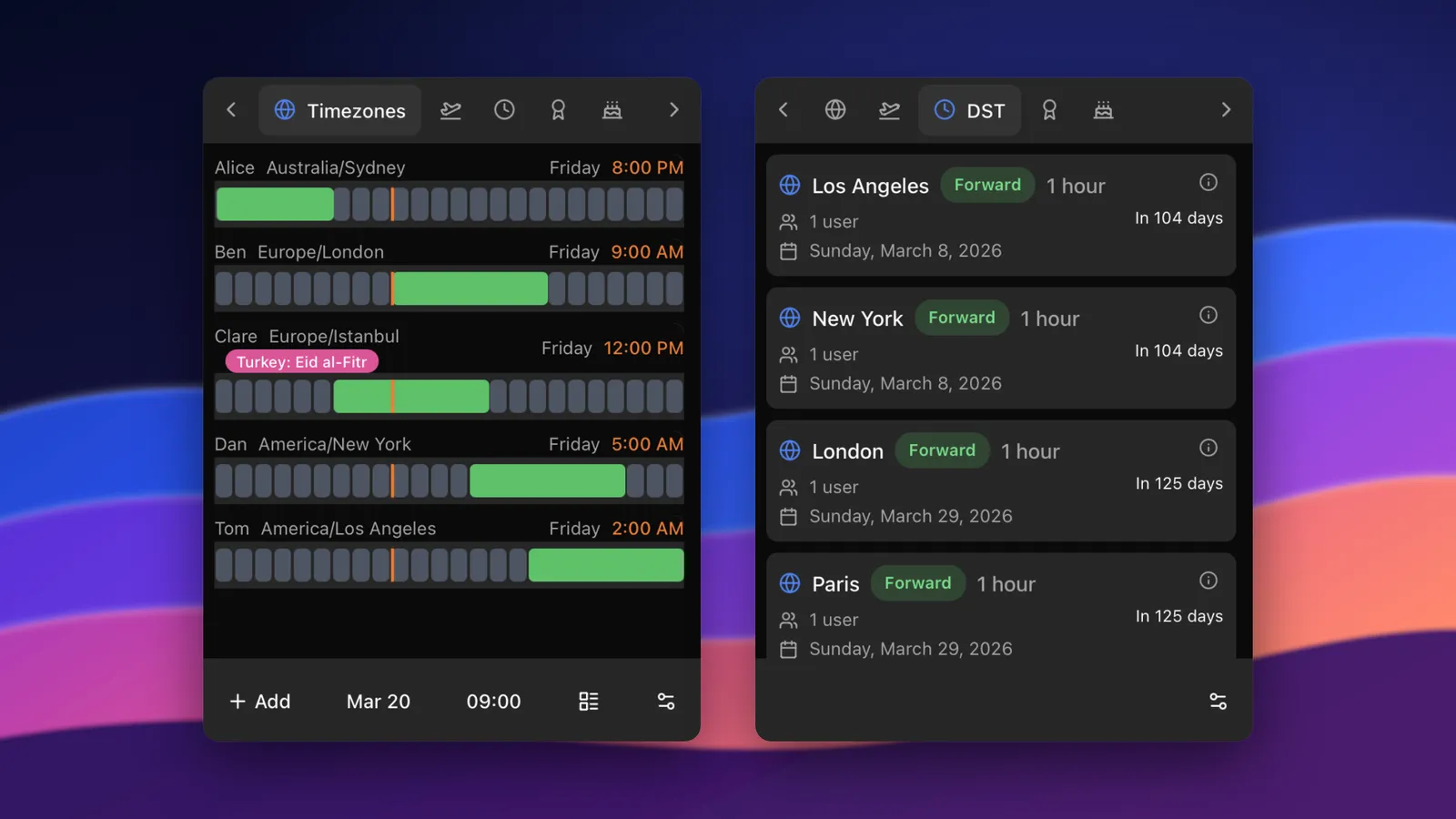
You scheduled a 9am standup. Completely reasonable: you’re in London, it’s the start of your day, and you want everyone aligned before work gets going.
Your colleague in Sydney is clearing up after dinner. The one in New York is asleep, because it’s 4am there.
This happens all the time in distributed teams, and it keeps happening because nobody wants to be the person who complains about the meeting time.
Why it’s so easy to get wrong
Calendars show times in your own time zone. When you book a meeting for 9am, you see 9am. You don’t see 6pm in Sydney or 4am in New York unless you go and check, and most people don’t think to until someone mentions it.
The people affected rarely do mention it. They join half asleep, or late into their evening, and quietly put up with it. It’s a slow drain on energy that’s hard to pin on any single cause.
There’s a second cost too. Someone dialling in at 6am or 10pm to make the time work isn’t at their best. They’re on the call, but they haven’t caught up on the day yet, or they’ve already switched off from it, and the standup gets less out of them than it would at a sensible hour.
What the time zone maths looks like
Take a team with people in London, New York, Bangalore and Sydney. In July, a 9am London standup lands like this:
- London: 9am
- New York: 4am
- Bangalore: 1:30pm
- Sydney: 6pm
Now look for an hour that suits everyone. There isn’t one. London and New York share 2pm to 5pm London time, and London and Bangalore share the morning, but Sydney’s working day ends at 8am London time, before London’s has started. The closest you can get with Sydney is an early London call at the end of their afternoon.
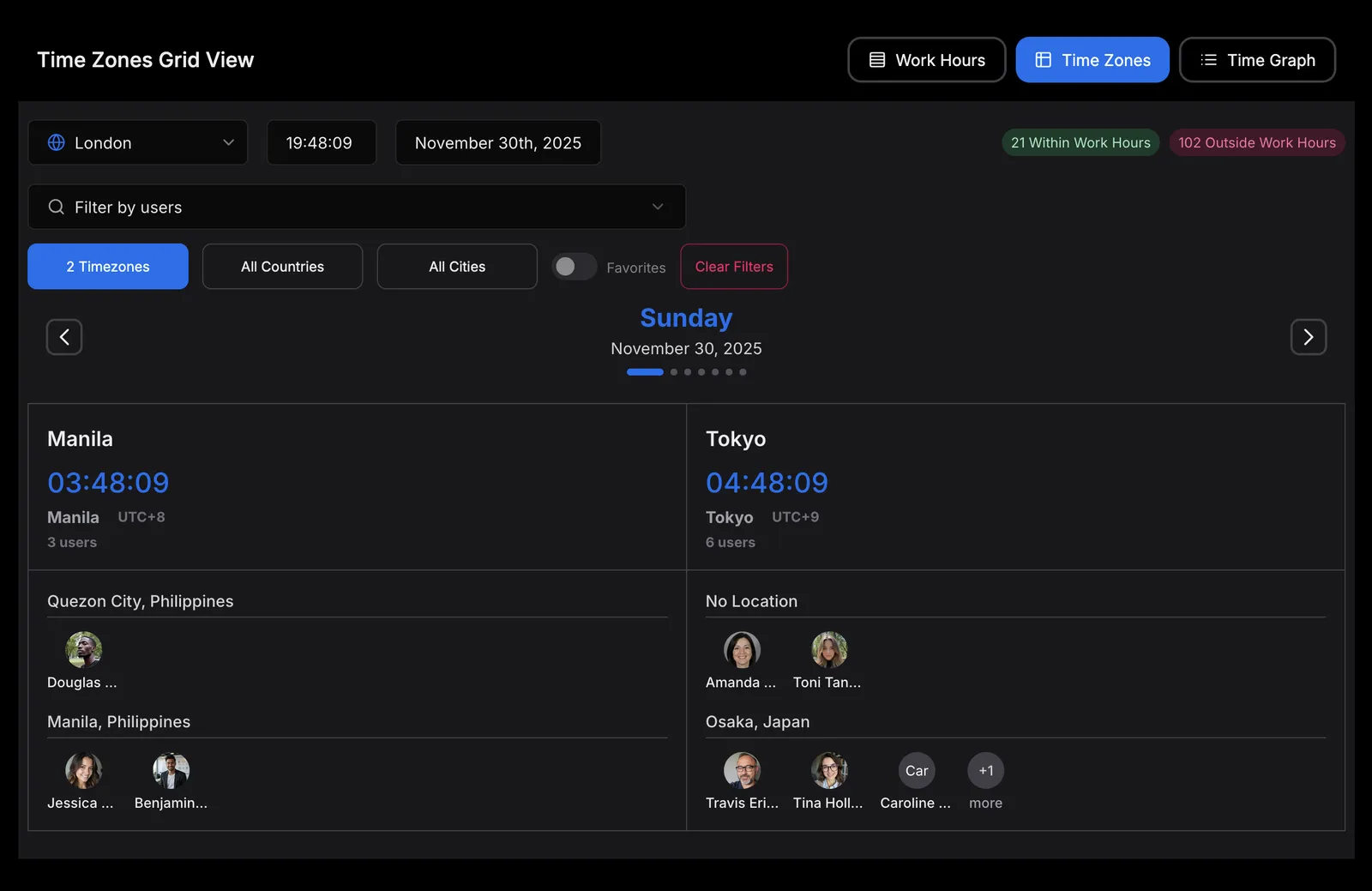
When it’s evening in London, it’s already the early hours of the next day in Manila and Tokyo.
Most global teams don’t have a clean overlap. You either rotate the inconvenience, so the same people aren’t always the ones up early or late, or you stop making everything live.
Clocks don’t change on the same day everywhere
Daylight saving time makes it harder, because countries change their clocks on different dates. The US moves forward on the second Sunday in March, while the UK and the EU wait until the last Sunday. For about three weeks, London and New York are four hours apart instead of five. A recurring 10am call booked from New York lands at 2pm in London instead of 3pm, and a 9am London standup is 5am in New York rather than 4am.
Autumn has the same problem in reverse, because Europe changes back a week before the US. The southern hemisphere moves the other way entirely: London and Sydney are nine hours apart in July and eleven in January.
A time zone isn’t a working day
Even in one city, people don’t all work the same hours. One person starts at 7am and finishes at 3pm. Another starts at 10am. A third has school pickup at 4pm. A time zone tells you what time it is somewhere, not whether someone is working.
Then there are public holidays. Germany has nine nationwide public holidays, and some states add several more. France has eleven. Book a Monday meeting without checking and you might be asking someone to join on their day off, or wondering why they haven’t replied.
What actually helps
Make the standup async. Most standups don’t need everyone on a call at the same moment. A short written update posted at the start of each person’s day covers the same ground, and everyone reads it when their day begins.
Rotate the meetings that need to be live. If there’s no good time, share out the bad ones so the same people don’t always lose their evening.
Check before you send the invite. Look at everyone’s working hours, holidays and clock changes for the date you’re booking, not just their time zone today.
That last one is what TeamVis is built for. Its working hours chart lines everyone’s day up on one timeline for any date you pick, with holidays marked, and in Slack or Microsoft Teams the /overlap command shows the hours you actually share with a teammate. For a quick check without an account, the free world time tool compares up to eight places and warns you about clock changes.
The 9am standup isn’t a bad idea. It just needs to be 9am somewhere that works for everyone involved. To see what that looks like for a sample team, open the live demo. No account needed.