Building TeamVis: Making Remote Work Less Awkward
Photo by Daniil Komov on Unsplash
Why I built TeamVis
Remote work unlocked something great for me. I was able to collaborate with smart, talented people from all around the world.
I loved working with remote colleagues, especially those in America, Australia and the Philippines, but the same problems kept creeping in when I was mid-sprint and focused on writing code.
It wasn’t just remembering time zones. It was finding out the 9am stand-up had moved because of a daylight saving time change, keeping track of someone’s unusual working hours, or waking up on a Monday to realise half the team was off for a national holiday.
Remote work keeps growing, but I couldn’t find a tool designed around the realities of distributed teams, for developers and managers alike.
The Real Problem Isn’t Time Zones. It’s Missing Context
The challenges of remote work go beyond knowing someone’s time zone. TeamVis is designed for fast-moving, distributed teams that need shared context without the extra complexity.
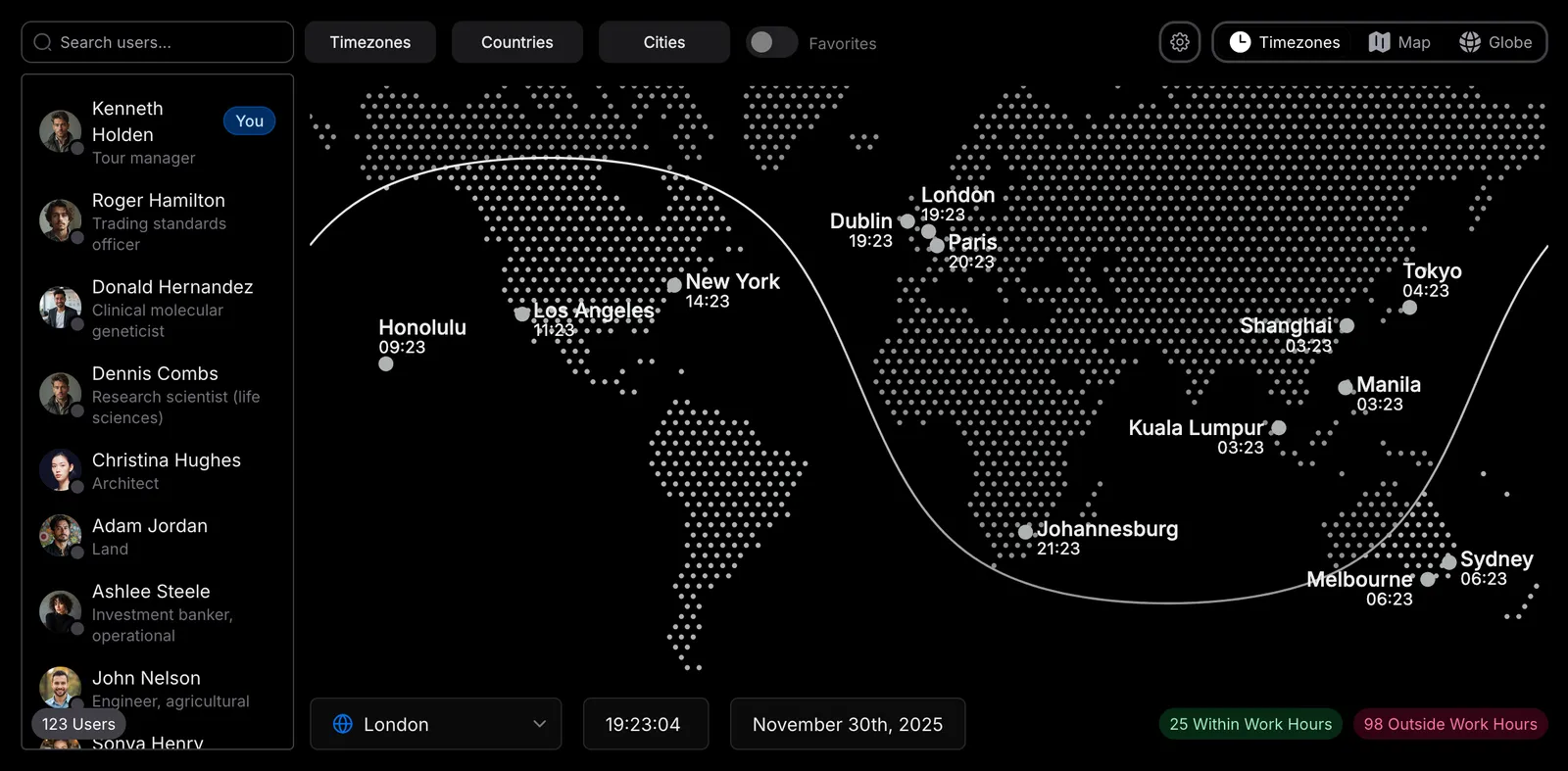
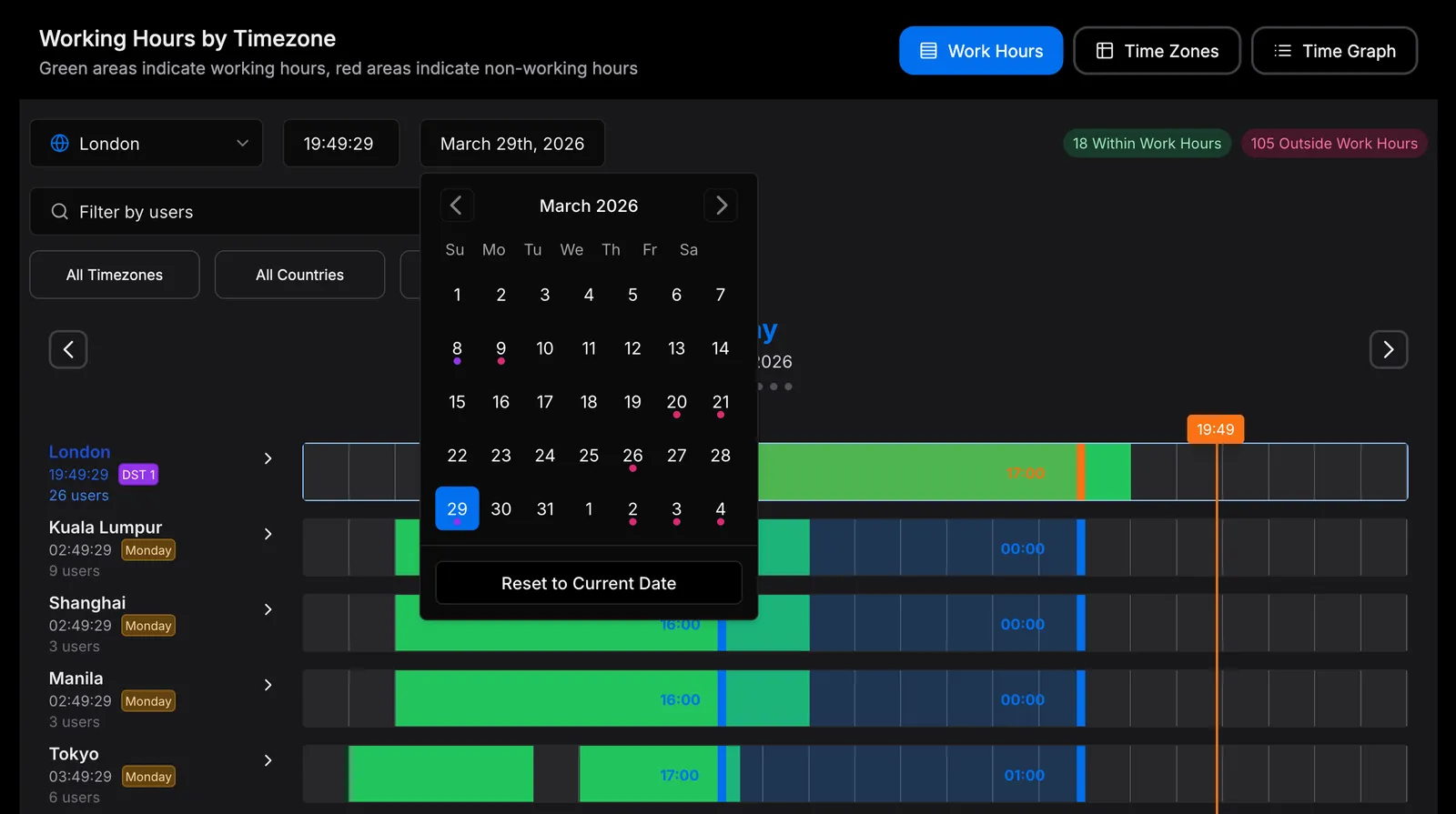
TeamVis syncs with Slack or Microsoft Teams and shows the hours your team works next to your own. You can also change the time, date or time zone to see the day from a colleague’s point of view.
Built for Individuals and Teams
Whether you’re a freelancer juggling a few clients, a small team working across countries, or a large growing company struggling with multiple time zones, TeamVis can provide immediate value.
There’s a free plan for individuals if you’d rather not commit straight away, and you can try the demo instantly. TeamVis is all about saving time, so there’s no sales call to book first.